Our ecosystem
One ecosystem. Many ways in.
SPARK prepares the adults who guide young people, supports meaningful learner journeys, and helps institutions and programmes make progress visible. Schools are where we began; colleges, NGOs, CSR sponsors, universities, institutions and mentoring programmes are equally valid pathways into the same mission.
- 01
Schools & Colleges
Educator readiness, mentoring, learner development, employability and institutional progress.
SPARK Studio for readiness, teacher-led mentoring and institutional progress.
- 02
NGOs & CSR
Structured youth-development programs, mentor enablement, longitudinal learner journeys, progress visibility and impact evidence.
Youth and student journeys, mentor readiness and evidence-aware reporting.
- 03
Universities & Institutions
Teacher education, experiential learning, research, readiness and institutional collaboration.
Experiential learning, research and co-design.
- 04
Youth & Mentoring Programs
Mentoring, aspirations, goals, reflection, exposure, readiness and continuity.
Continuous learner journeys, with mentors supported rather than replaced.
Pathway 01
Schools & Colleges
Educator readiness, mentoring, learner development, employability and institutional progress.
Primary need: Ready educators, steady mentoring and a clearer view of each learner's growth.
01
Schools (Grades 6–12)
Become a school where every child is seen and every teacher is ready
The challenge
- Professional development is often theoretical, occasional and hard to apply on Monday morning.
- Teachers face judgment calls on inclusion, wellbeing and parent conversations with little chance to practise.
- What a teacher learns about a child is often lost at the end of the year.
How SPARK helps
SPARK is built to be your school's transformation partner. Studio readies your teachers through realistic Situation Rooms; Compass is the longer-term path to carrying each learner forward, year after year.
Ways to collaborate
- A listening conversation about your priorities and context
- Studio for a teacher cohort, with facilitated reflection
- An invitation to co-design SPARK Compass
Suggested pilot · Teacher cohort pilot
A cohort of your teachers works through a sequence of Situation Rooms over a term, with facilitated reflection and a closing review with school leadership.
A starting shape, agreed and adapted with each partner.
The challenge
- Teaching quality and culture vary from campus to campus.
- Central teams need practical, consistent development that still respects local context.
- Leaders want evidence before committing to group-wide change.
How SPARK helps
SPARK gives your network a shared language of teacher readiness: common Situation Rooms and one reflection habit, so every campus grows in the same rhythm while honouring its own context.
Ways to collaborate
- Group-level planning with academic and HR leadership
- Cohorts drawn from several campuses learning together
- Shared review of what worked before wider adoption
Suggested pilot · Multi-campus pilot
Start with a small number of campuses, compare experience across contexts, and decide on wider adoption together, based on what you observe.
A starting shape, agreed and adapted with each partner.
03
Colleges
Help every student leave with clarity, readiness and a mentor who knew them
The challenge
- Students often reach the end of college without a clear sense of their strengths, direction or next step.
- Faculty and mentors want to guide students individually but rarely have a structured rhythm for it.
- Employability and readiness are discussed in placement season rather than built across the years.
How SPARK helps
SPARK brings the same human-centred logic to colleges: prepare faculty and mentors through experience, keep mentoring conversations with each student going, and make progression more visible. College-specific content is being shaped with partners and is proposed, not yet built.
Ways to collaborate
- A listening conversation about mentoring, career clarity and student progression
- Co-designing Situation Rooms for faculty and mentors
- Exploring a structured mentoring rhythm for one department or cohort
Suggested pilot · Department mentoring pilot
One department or student cohort, a small group of faculty mentors, and a shared view of what better mentoring and readiness should look like, agreed before the work begins.
A starting shape, agreed and adapted with each partner.
Pathway 02
NGOs & CSR
Structured youth-development programs, mentor enablement, longitudinal learner journeys, progress visibility and impact evidence.
Primary need: Programmes that last, mentors who are supported, and progress that can be seen and reported honestly.
Model 1
School Transformation
Teacher and mentor readiness plus school improvement.
Typical use: CSR-funded school cohorts using SPARK Studio and facilitated reflection.
Model 2
Youth Development & Mentoring
Student cohorts, mentors, structured journeys, progress visibility and outcomes narratives.
Typical use: NGO and CSR programmes, such as Vandemataram Foundation's, where SPARK helps structure mentoring and development over time.
See it with Vandemataram Foundation04
NGOs & foundations
Make teacher transformation last in the schools you support
The challenge
- Teacher training programmes are hard to sustain once a project ends.
- Impact on everyday teaching practice is difficult to see and report honestly.
How SPARK helps
SPARK supports two kinds of programme. School transformation: teacher and mentor readiness alongside school improvement. Youth development and mentoring: student cohorts, mentors, structured journeys and progress visibility, so field work becomes easier to follow and report. Either begins with a defined scope and outcomes agreed up front.
Ways to collaborate
- Pilots in partner schools within your existing programmes
- Structuring mentoring and student journeys within youth-development programmes
- Shared design of what success looks like
- Transparent reporting on what worked and what didn't
Suggested pilot · Programme-embedded pilot
Run Studio with teachers in schools you already support, evaluated against measures agreed with your team before the pilot begins.
A starting shape, agreed and adapted with each partner.
05
CSR sponsors
Invest in teachers, and in change that outlasts the programme
The challenge
- Sponsors want impact that outlasts a single event or donation.
- Reporting often relies on attendance numbers rather than change in practice.
How SPARK helps
Sponsor an evaluated school-transformation pilot centred on teachers, or a youth-development and mentoring programme with progress made visible, with scope and measures agreed together and reported openly.
Ways to collaborate
- Sponsor a pilot in schools you choose or that we identify together
- Agree evaluation measures before the work starts
- Receive candid reporting, including what did not work
Suggested pilot · Sponsored school pilot
A defined pilot in one or more partner schools, with teacher cohorts in Studio and a jointly agreed evaluation and reporting plan.
A starting shape, agreed and adapted with each partner.
Pathway 03
Universities & Institutions
Teacher education, experiential learning, research, readiness and institutional collaboration.
Primary need: Experiential preparation, research settings and evidence before any scale-up.
06
Universities & teacher education
Prepare the next generation of teachers through experience
The challenge
- Student-teachers often meet real classroom dilemmas for the first time during a short practicum.
- Connecting theory to in-the-moment judgment is hard to teach and harder to assess.
- Research on how teachers develop professional judgment needs realistic, structured settings.
How SPARK helps
We welcome universities and teacher education programmes as collaboration partners today. Higher-education programmes are a possible future direction we would shape with them.
Ways to collaborate
- Situation Rooms within pre-service or in-service courses
- Joint research on judgment, reflection and practice
- Co-developing scenarios grounded in Indian classrooms
Suggested pilot · Course or practicum pilot
Integrate selected Situation Rooms into one course or practicum for a semester, around a research question designed jointly with faculty.
A starting shape, agreed and adapted with each partner.
07
Education authorities & institutions
Imagine student-centered transformation at system level
The challenge
- Large-scale training is hard to make practical and personal.
- New approaches need evidence in local contexts before scale-up.
How SPARK helps
We are interested in exploratory conversations about how experiential teacher readiness could complement existing programmes and policy goals.
Ways to collaborate
- Exploratory discussion of priorities
- Small, evaluated demonstrations before any scale-up
- Research and technology collaboration on responsible design
Suggested pilot · Evaluated demonstration
A small, carefully evaluated demonstration in a limited set of schools, designed with the institution, before any decision on wider use.
A starting shape, agreed and adapted with each partner.
Pathway 04
Youth & Mentoring Programs
Mentoring, aspirations, goals, reflection, exposure, readiness and continuity.
Primary need: Mentoring that continues when people change, and journeys that can be followed over time.
This pathway describes the wider problem SPARK is working on. It is not a claim that SPARK Compass is already a general youth or NGO platform; Compass remains proposed and school-focused.
08
Youth & mentoring programs
Make every mentoring journey continuous, not occasional
The challenge
- Mentors change, volunteers rotate, and what was learned about a young person is easily lost.
- Goals, reflections and moments of exposure are rarely captured in a way that carries forward.
- Programme leaders struggle to see how cohorts are progressing without adding paperwork for mentors.
How SPARK helps
SPARK is working on how to make mentoring, goals, reflection, exposure and readiness more continuous and visible across a young person's journey, with mentors supported rather than replaced. This is an ecosystem direction shaped with real programmes; it is not a claim that SPARK Compass is already a general youth platform.
Ways to collaborate
- Understanding your mentoring model, cohorts and the journeys you want to support
- Mentor and facilitator readiness through Situation Room-style rehearsal
- Shaping a structured, consent-first way to carry each young person's story forward
Suggested pilot · Cohort journey pilot
One cohort, its mentors and an agreed set of goals and reflections, followed over a defined period with programme leaders reviewing what became more visible.
A starting shape, agreed and adapted with each partner.
How every relationship begins
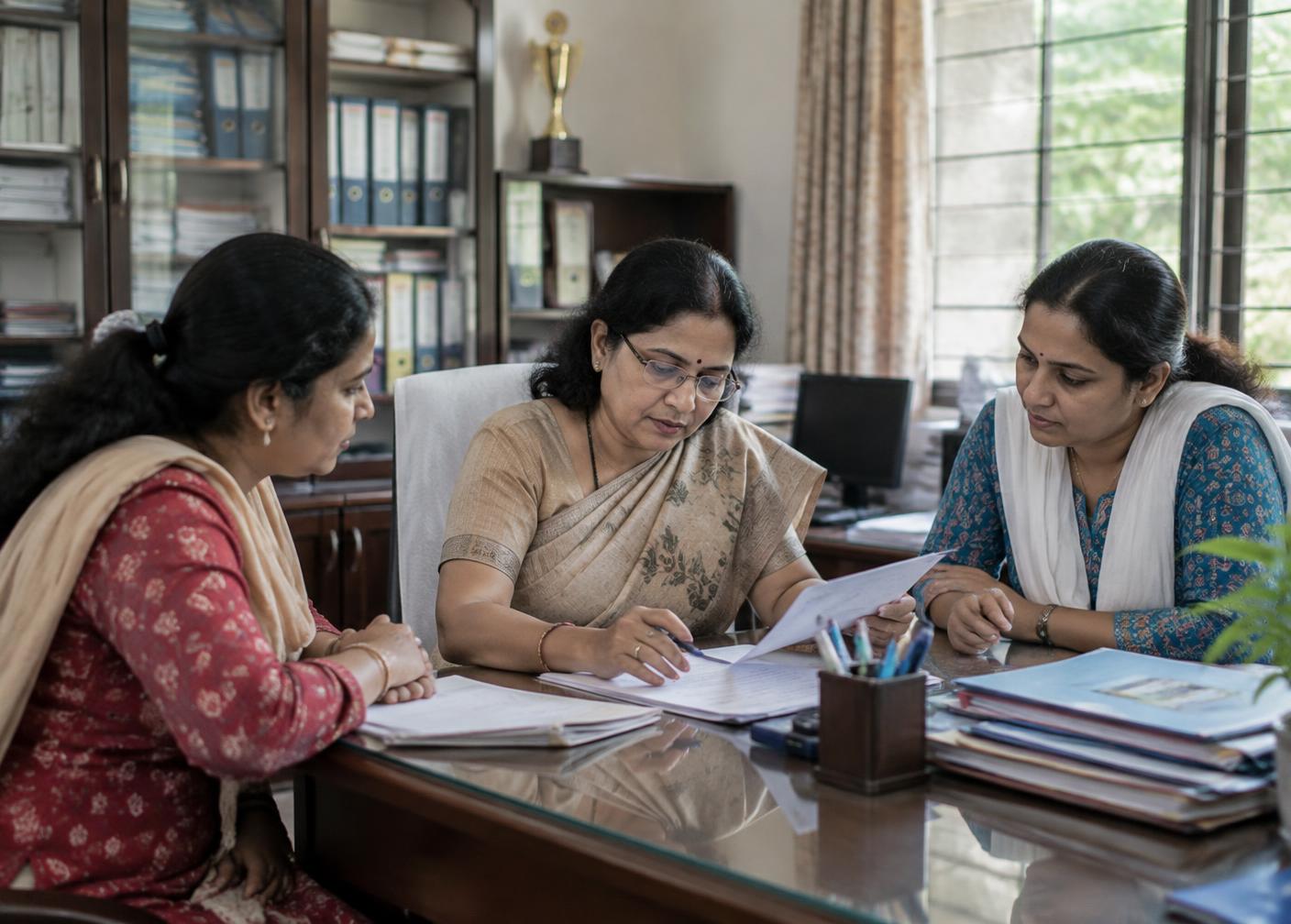
We start by listening, not with a fixed package
We first understand your context, then agree what success would look like, and only then propose a way forward. Every pilot described here is a starting point to shape together.

SPARK in Action
Vandemataram Foundation: technology around the work already happening on the ground
VMF works directly with government-school students, mentors, teachers, parents and communities through programs such as Shata Shaatam and Kalam 100. SPARK is helping that work become more connected, visible and easier to carry forward.
Currently supporting program visibility across 34 government schools and approximately 8,500 students.
Read the storyLet's unlock potential together
Tell us about your school, college, programme or organisation and what you hope to achieve together. A member of the SPARK team will respond personally.